Winning at Hack the Diff – Building the WRU Rugby Discover Tool
Winning at Hack the Diff – Building the WRU Rugby Discover Tool
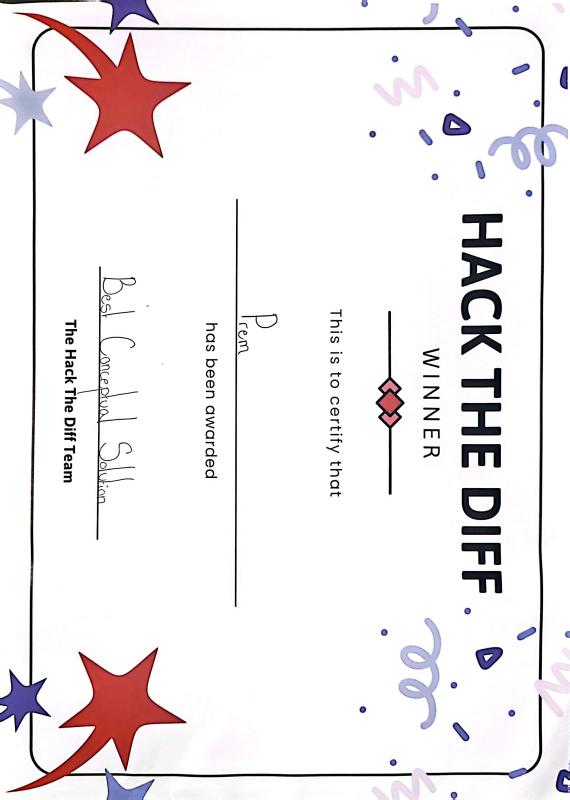
Recently, I had the opportunity to participate in a hackathon in Cardiff called Hack the Diff. It was an incredibly enjoyable and rewarding experience. Over the course of just a few hours, my team built a project we were genuinely proud of — and to top it off, we won the Best Conceptual Award.
Choosing the Challenge
Three organisations presented problem statements for the hackathon, each offering a real-world challenge to solve within a limited timeframe. We chose to work with the Welsh Rugby Union (WRU), as we felt their challenge was both meaningful and achievable within the constraints of the event.
The WRU's proposal was the Rugby Discover Tool — a digital platform designed to help people discover and connect with Welsh rugby clubs and teams.
The Core Problem
Currently, there is no single public-facing platform where people can easily search for rugby clubs in Wales. Participation often relies on word of mouth or existing connections, which can unintentionally create barriers for newcomers, returners, or individuals from underrepresented groups.
The key challenges identified by the WRU included:
- No easy way to search for Welsh rugby clubs online
- Limited visibility of volunteering and inclusive rugby opportunities
- Inconsistent digital presence across clubs
- A lack of personalised guidance for people wanting to get involved
The goal was to design a responsive web application that would:
- Help users discover rugby clubs near them
- Highlight different ways to get involved (playing, volunteering, inclusive formats)
- Provide personalised recommendations
- Make it easy to contact clubs and take the next step
Planning Our Approach
We began by sketching out the framework of the website, mapping the user journey and defining how we would approach the problem strategically. Given the tight timeframe, clarity and simplicity were essential.
Once we agreed on a structure, I explored the provided database to understand what data was available and how we could use it effectively. Since we were given access to genuine club and team data, we wanted to ensure we leveraged it properly to build something realistic and scalable.
Technical Decisions
We chose to build the project using Next.js, as it allowed us to manage both the frontend and backend within the same environment — a major advantage in a time-constrained hackathon setting. This streamlined our development workflow and reduced deployment complexity.
For location-based discovery, we integrated the Google Maps API to create an interactive map that displayed rugby clubs across Wales. Users could visually identify clubs near them, aligning directly with the WRU's requirement for location-based discovery.
To improve performance, we implemented caching to ensure club data loaded quickly and efficiently — especially important for a map-driven interface.
Key Features We Built
Within just a few hours, we implemented:
- An interactive map showing rugby clubs by location
- A searchable and filterable club list
- Club profile previews
- A foundation for personalised recommendations
- Contact information display for clubs
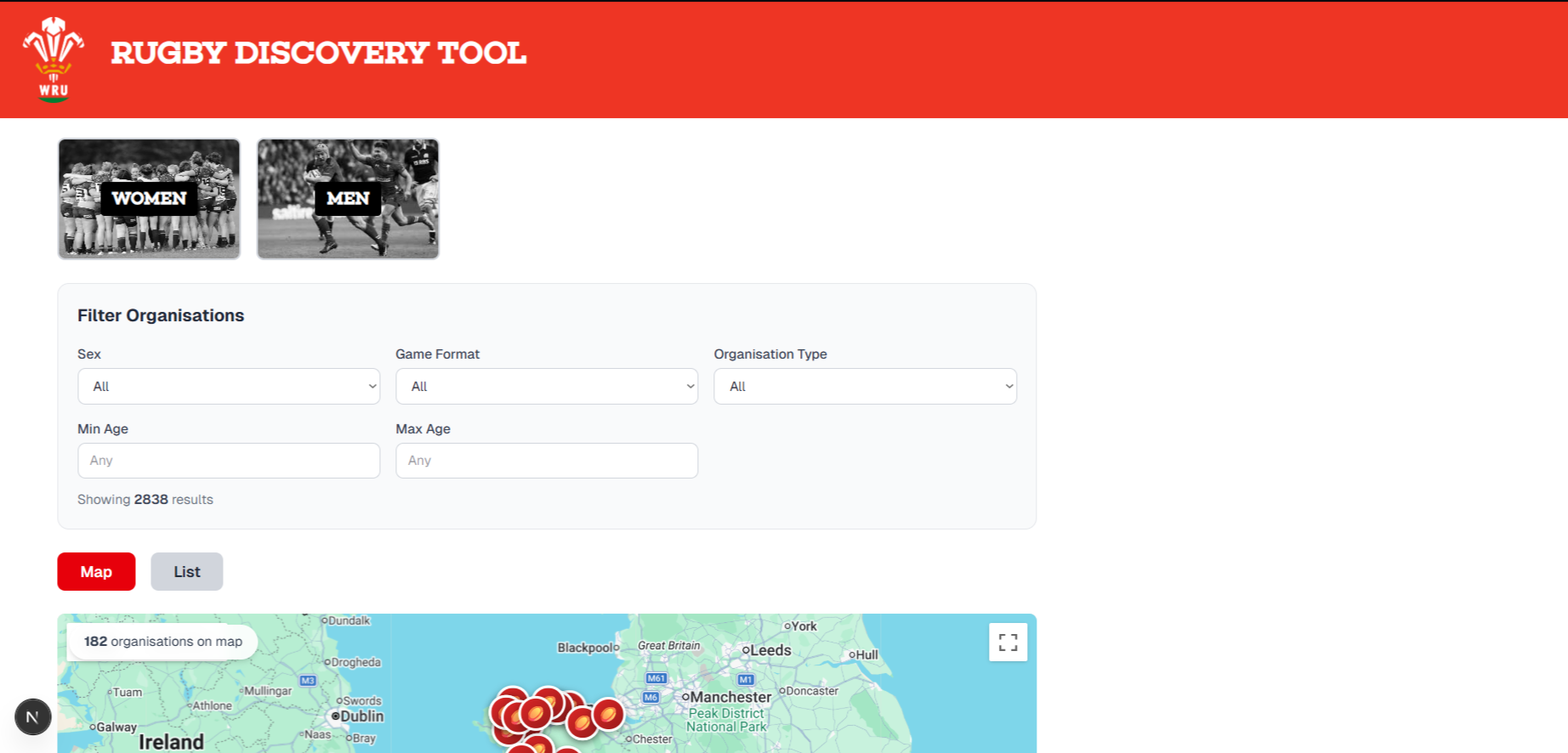
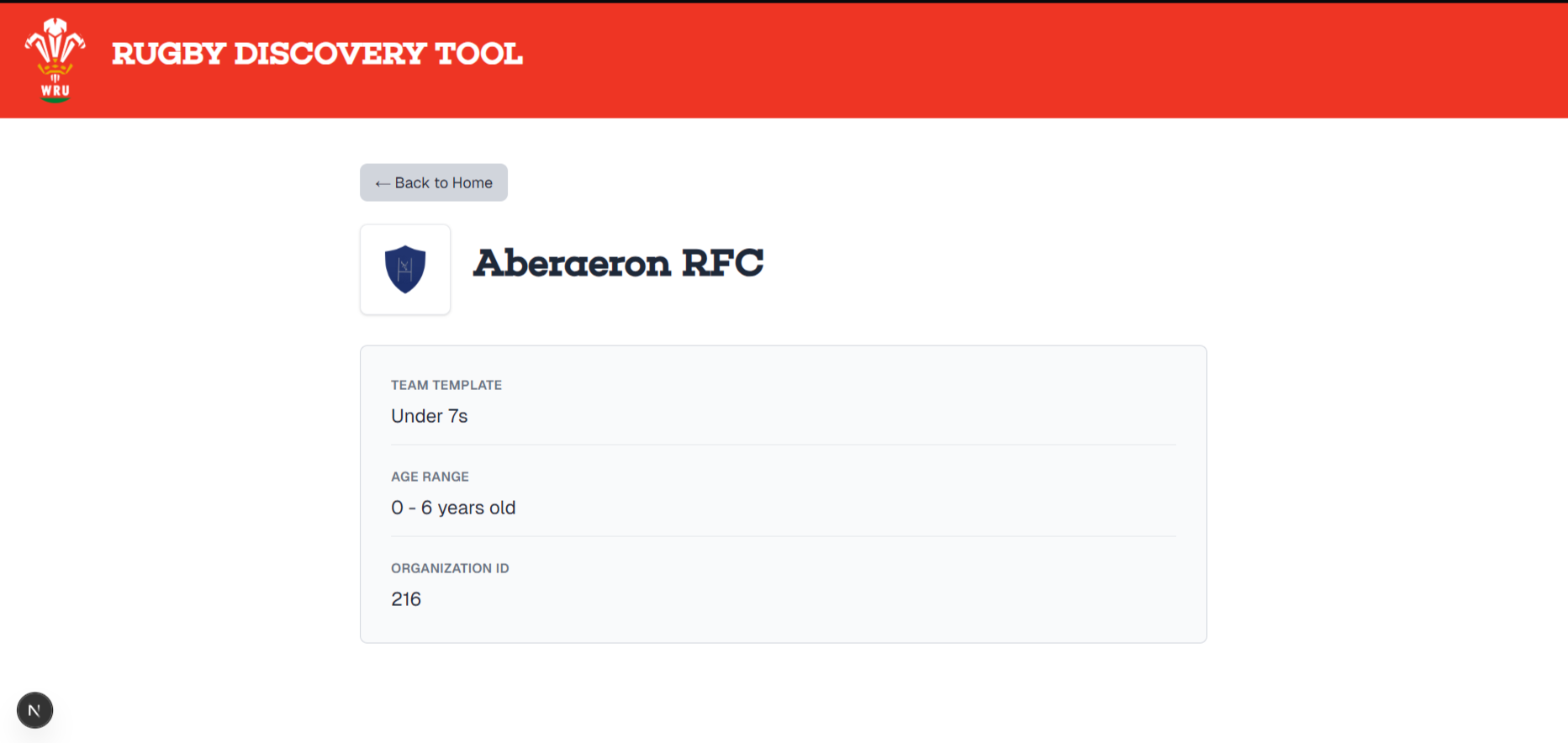
Our focus was on demonstrating the concept clearly: reducing friction for new participants and making rugby more accessible and inclusive through digital tools.
Teamwork & Execution
One of the most rewarding parts of the hackathon was the collaboration. We worked efficiently as a team, dividing responsibilities while continuously communicating to ensure cohesion in both design and functionality.
Time pressure can often create chaos, but instead, it sharpened our focus. Every decision had to be intentional.
The Outcome
At the end of the event, we were awarded Best Conceptual Award for our project. It was incredibly satisfying to see our approach recognised — especially given the strategic and long-term potential of the idea.
Beyond the award, the experience reinforced several key lessons:
- Rapid prototyping under constraints
- Strategic thinking in product design
- Balancing technical feasibility with user experience
- Working effectively as a team under pressure
Final Thoughts
Hack the Diff was not just about building a project — it was about solving a real-world problem with tangible impact. The WRU's vision of making rugby more accessible across Wales is both meaningful and forward-thinking, and it was exciting to contribute to that vision, even in a small way.
I thoroughly enjoyed the experience and would absolutely participate again. Hackathons like this remind me why I love building technology — especially when it has the potential to make participation more inclusive and accessible.